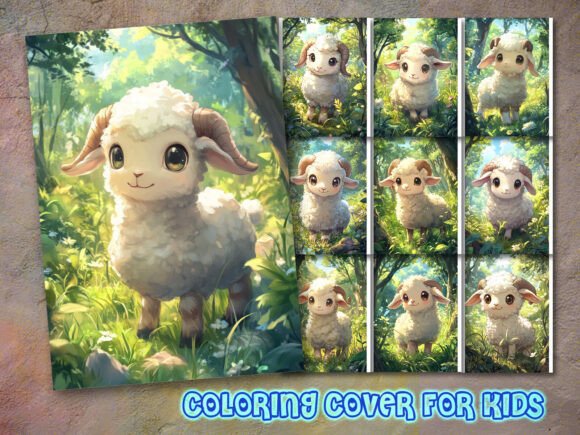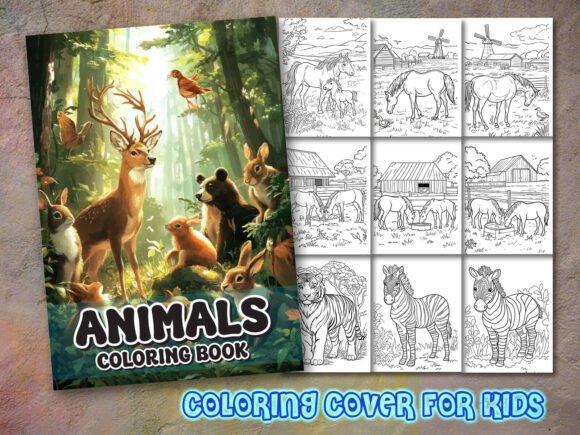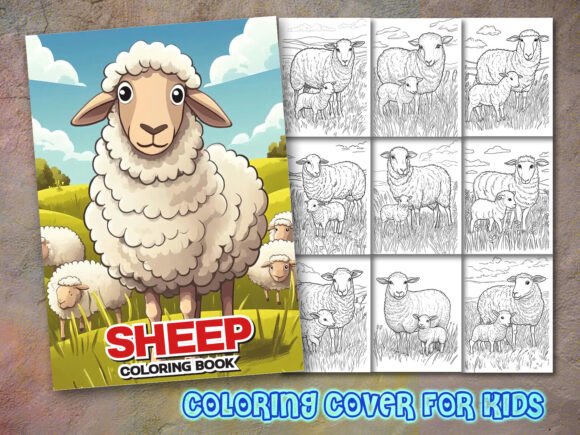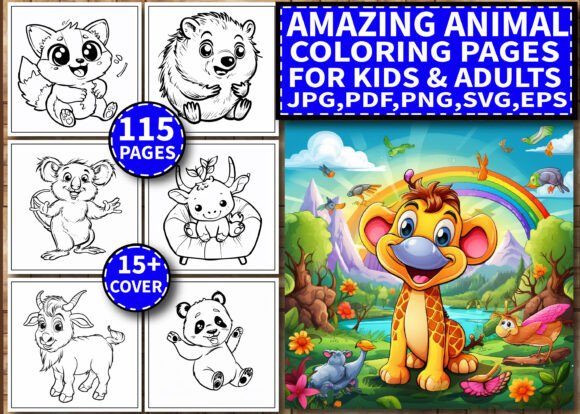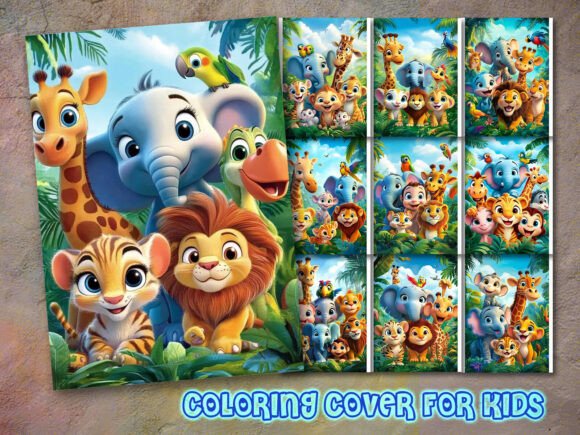
Animal Coloring Book Cover Design That Converts and Connects
If you've ever uploaded a coloring book to Kindle Direct Publishing only to watch sales stall—not because the interior art is weak, but because the cover doesn’t stop scrollers in their tracks—you already know how much weight an Animal Coloring Book Cover Design carries. It’s not just decoration. It’s your first (and often only) chance to signal quality, audience fit, and creative intention—before a single page is turned.
This isn’t about picking a cute fox or a smiling panda and slapping it on a template. A high-resolution, professionally considered cover does three things at once: tells buyers *who this book is for*, signals *what kind of experience they’ll get inside*, and quietly reassures them *this was made with care—not rushed or auto-generated*. That’s why so many KDP creators now treat their cover as a strategic asset—not an afterthought.
Where Real People Use Animal Coloring Book Cover Design—Not Just “Designers”
Think beyond graphic designers. A homeschooling parent building a themed unit on wildlife might download an Animal Coloring Book Cover Design to pair with custom interior pages she’s drawn for her kids—and then print 10 copies for her co-op class. A small-biz therapist uses one as the front of a downloadable PDF she offers clients as part of a grounding exercise toolkit. A freelance educator bundles three animal-themed interiors (jungle, ocean, farm) under distinct, cohesive covers—each sized precisely for 8.5″ x 11″ printing and optimized for Amazon’s thumbnail preview.
Even non-artists rely on these covers. A solopreneur launching a side hustle selling printable coloring packs on Etsy doesn’t need Photoshop skills—she needs consistency, clarity, and credibility. A well-designed cover helps her listings stand out next to dozens of generic “cute animals” thumbnails. It makes her brand feel intentional, not pieced together.
Why Resolution, Size, and Format Matter More Than You Think
The detail in your Animal Coloring Book Cover Design isn’t just about looking sharp on screen—it directly affects how trustworthy your book feels on Amazon. A blurry or pixelated cover triggers subconscious doubt: *If the cover looks low-effort, is the interior rushed too?* That’s why 300 dpi at 8.5″ x 11″ isn’t just a spec—it’s a quiet promise of professionalism. It ensures crisp text legibility (especially important for titles like “Cute Baby Goat Coloring Book” or “Kindergarten Animal Coloring Pages”), smooth gradients, and clean edges—even when compressed by Amazon’s upload system.
And those 16 JPG files? They’re not filler. They’re flexibility. You might use one as your primary KDP cover, another as a Pinterest pin for your blog post on “Therapeutic Coloring for Kids”, a third cropped for an Instagram story highlight, and a fourth resized for a printable catalog page at a local library event. Each file serves a different real-world touchpoint—no re-exporting, no quality loss.
Real Scenarios—And What to Watch For
A blogger testing a new niche: She’s writing about mindful activities for elementary classrooms and wants to offer a free downloadable “Ocean Animal Coloring Pack” as a lead magnet. She chooses an Animal Coloring Book Cover Design with soft blues, gentle sea creatures, and clear, readable title font—not cartoonish or overly busy. Why? Because teachers scanning her site need to instantly recognize it as classroom-appropriate, not just “fun”. She uploads the cover alongside her 16 interior pages, and conversion jumps 22% over her previous generic PDF cover.
A part-time illustrator expanding into KDP: He’s strong on line art but less confident in typography and layout. Instead of spending hours tweaking fonts in Canva, he selects a cover that already balances bold animal illustration with balanced negative space and a clean title block—leaving him time to focus on what he does best: drawing expressive, age-appropriate animal coloring pages for kids ages 4–8.
An adult coloring enthusiast launching her first self-published book: She knows her audience loves detailed, nature-inspired scenes—but also values calming color palettes and intuitive page flow. Her chosen cover uses muted earth tones, a subtle watercolor texture, and a centered composition with a wise-looking owl and fern border. It doesn’t scream “kids”—it whispers “thoughtful, restorative, grounded”. That alignment helped her debut hit #1 in “Adult Animal Coloring Books” within two weeks.
What to Consider Before You Download or Upload
Ask yourself: *Does this cover reflect who’s actually opening the book—not just who I hope will?* A “Cute Baby Animal Coloring Book” cover should feel warm and inviting, yes—but if your interior includes intricate mandala-style borders around each animal, the cover should hint at that depth, not just show a simplified outline. Mismatched expectations lead to poor reviews (“Too hard for my 5-year-old!” or “Too babyish for my 10-year-old!”).
Also check spacing. Does the title area leave room for your exact book title without crowding or clipping—especially if you plan variations like “Volume 2” or “Deluxe Edition”? And verify that any included text elements (like “Ages 4–8” or “Therapeutic Coloring”) match your actual audience and positioning. Don’t assume “cute” always means “for toddlers”—some grown-ups love whimsical animal themes too.
Finally, remember: your cover works hardest when it’s *consistent* with your interior. If your 16 JPG interior pages feature clean black-and-white line art with generous white margins and no background textures, your cover shouldn’t suddenly go full-color watercolor collage—unless that contrast is deliberate and explained (e.g., “Front cover shows final colored version—interior is ready for your palette”). Cohesion builds trust.
More Than a Cover—It’s Your First Conversation With the Reader
An Animal Coloring Book Cover Design is where intention meets visibility. It’s how a busy parent scrolling Amazon on her phone at 7:47 a.m. decides whether this book solves her “rainy-day activity” problem. It’s how a counselor selects a resource for a child struggling with transitions. It’s how a grandparent finds something meaningful to share across generations—without needing instructions or tech help.
When you choose a high-resolution, thoughtfully composed cover—paired with interior pages that truly serve your audience—you’re not just checking off a KDP requirement. You’re extending an invitation: *This space is made for you. Your creativity matters here. Your calm, your focus, your joy—it starts on this page.*