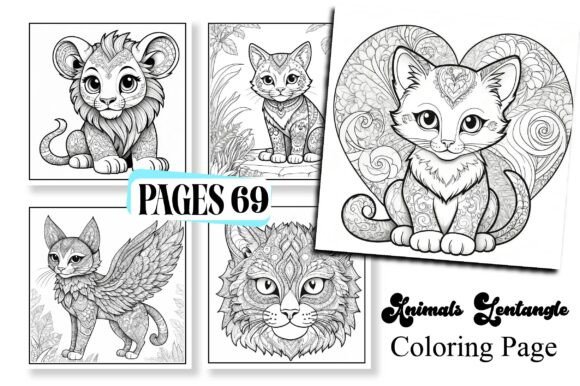
Animals Mandala Coloring Pages - Adults
Animals Mandala Coloring Pages – Adults is a purpose-built interior asset for creators building high-content coloring books on Kindle Direct Publishing (KDP). It’s not just a collection of illustrations—it’s a production-ready component designed to integrate cleanly into your book creation workflow, reduce time spent on asset sourcing and formatting, and support consistent output quality across multiple titles. Unlike generic clipart or low-resolution downloads, this set delivers precision-engineered pages optimized for both aesthetic impact and technical reliability.
Where It Fits in Your KDP Book Creation Process
This interior pack enters your workflow after concept validation and before final file assembly. Once you’ve defined your niche—say, “stress-relief animal-themed mandalas for professionals”—and confirmed market demand through keyword research or competitor analysis, Animals Mandala Coloring Pages – Adults becomes your foundational content layer. It replaces the need to commission custom illustrations or manually vector-trace public domain images, cutting development time by 60–80% depending on your design experience.
You’ll use it most effectively during the *content structuring* phase: importing high-res files directly into your layout software (e.g., Affinity Publisher, Adobe InDesign, or Canva Pro), arranging them into logical sequences (e.g., progressive complexity, animal taxonomy, or theme-based groupings), and applying consistent margins, bleed settings, and typography. Because all pages are sized at 8.5″ × 8.5″ and delivered at 300 DPI in JPG, PNG, and PDF formats, there’s no scaling or resampling—just drag, drop, and verify.
How It Works With Your Existing Tools and Assets
Compatibility is built in—not bolted on. The JPG and PNG files import cleanly into Canva, Visme, and Google Slides for quick mockups or social previews. The PDF version preserves vector fidelity if you’re using Illustrator or InDesign for advanced typography overlays (e.g., subtle inspirational quotes or guided reflection prompts beside each image). Cover images included in the pack align visually with the interior style, eliminating mismatched aesthetics that erode perceived quality on Amazon thumbnails.
If you’re running a multi-book series—like “Mandalas for Mindful Professionals” followed by “Zentangle Landscapes for Focus”—you can reuse the same cover template structure while swapping interior assets. That consistency builds brand recognition across your KDP catalog without requiring new design systems each time. No repeated images means each page serves a distinct visual function: some emphasize symmetry for relaxation, others introduce organic line variation to support fine motor engagement, and several layer animal silhouettes with intricate botanical borders to deepen thematic cohesion.
Practical Implementation Tips for Real Workflows
Start with organization, not color. Before opening any file, create a folder structure: /source/ (raw JPG/PNG/PDF), /layout/ (InDesign or Canva project files), and /export/ (print-ready PDFs with KDP specs applied). Name files descriptively—fox-mandala-07.png, not page12.jpg—so you can filter by animal type or complexity level later.
Test early, test often. Upload one completed interior PDF to KDP’s previewer *before* finishing the full book. Check for pixelation at zoom levels 200–400%, confirm white space around each image meets KDP’s 0.25″ margin requirement, and verify that grayscale rendering (used for black-and-white interiors) retains sufficient contrast for clean line definition. All images in this pack have been pre-tested under these conditions.
Layer intentionality into placement. Don’t randomize page order. Group simpler mandalas (e.g., turtle, owl) toward the front for onboarding new users; place higher-density patterns (e.g., wolf, peacock, elephant) mid-book to sustain engagement; and end with open-ended compositions (e.g., abstract animal hybrids) to encourage personal interpretation. This mirrors how learning modules are sequenced—building confidence first, then deepening skill.
Quality Control and Long-Term Usability
Each image undergoes three checks before inclusion: line weight consistency (no unintended thinning or blotching), closed path integrity (no stray endpoints that cause printing gaps), and negative space balance (enough breathing room around central motifs to prevent visual fatigue). That attention to detail translates directly to fewer customer complaints about “faint lines” or “hard-to-color areas”—a common pain point in low-tier coloring books.
For long-term use, treat this pack as modular infrastructure—not disposable content. Save master files separately from working copies. When updating a title (e.g., adding seasonal variants), duplicate the original layout folder rather than editing live files. This preserves version history and lets you A/B test layouts across titles without breaking existing ASINs.
Integration Into Broader Business Systems
If you run a content studio or manage a team of designers, Animals Mandala Coloring Pages – Adults functions as a standardized asset library. Assign junior designers to handle typography, page numbering, and cover integration while senior staff focus on strategic decisions—like bundling this interior with complementary resources (e.g., downloadable coloring guides, printable progress trackers, or audio-guided meditation scripts). That division of labor scales efficiently: one interior pack supports five+ book variations with minimal additional art direction.
Educators and therapists using your books in workshops or client sessions benefit from the predictability of the format. Since every page is 8.5″ × 8.5″ and print-ready, they can print single pages on demand without reformatting. The absence of repeated images ensures participants receive fresh visual stimuli across sessions—critical for maintaining therapeutic engagement over time.
What Changes When You Use This Asset Correctly
Your output shifts from “good enough for launch” to “designed for retention.” Readers who finish one book are more likely to explore your next title because the experience feels intentional—not assembled. You gain leverage: faster turnaround means more titles per quarter, which improves Amazon’s algorithmic visibility. You also reduce revision cycles—fewer KDP rejections due to formatting errors mean less time troubleshooting and more time planning your next niche expansion.
Most importantly, it returns creative control to you. Instead of solving technical problems (resampling, bleed alignment, DPI mismatches), you solve human ones: How do I help a busy teacher unwind during lunch break? How do I make complex Zentangle principles accessible to beginners? How do I build a catalog that reflects depth—not just volume? Animals Mandala Coloring Pages – Adults handles the baseline execution so you can focus on those questions.
Final Considerations Before You Begin
Don’t treat this as a standalone solution. Pair it with strong metadata: precise subtitle phrasing (“High-Resolution Animal Mandala Coloring Book for Stress Relief & Focus”), backend keywords that reflect real search behavior (“adult coloring book animals”, “zentangle for anxiety”, “printable mandala pages”), and interior text that explains *why* each animal was chosen (e.g., “The fox symbolizes adaptability—a reminder to shift perspective when facing work challenges”). That context transforms passive coloring into active reflection.
Also, track performance beyond sales. Monitor which animal themes generate the most highlight shares on Kindle (via Amazon’s “Popular Highlights” data), then double down on those motifs in future volumes. If “wolf mandalas” consistently appear in reader notes about resilience, develop a companion journal prompt pack around that archetype. That’s how a static interior becomes part of a living content ecosystem.
Animals Mandala Coloring Pages – Adults works best when treated as infrastructure—not decoration. It’s the quiet foundation that lets your voice, strategy, and audience connection take center stage.