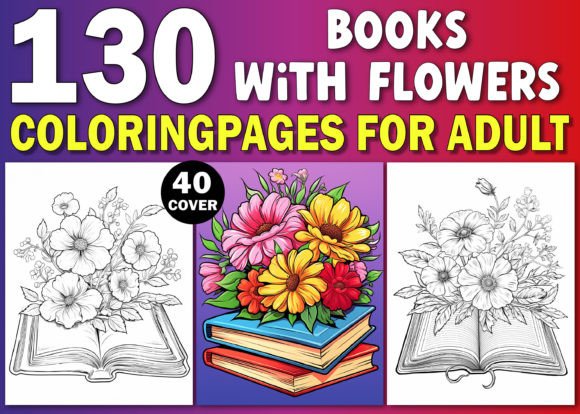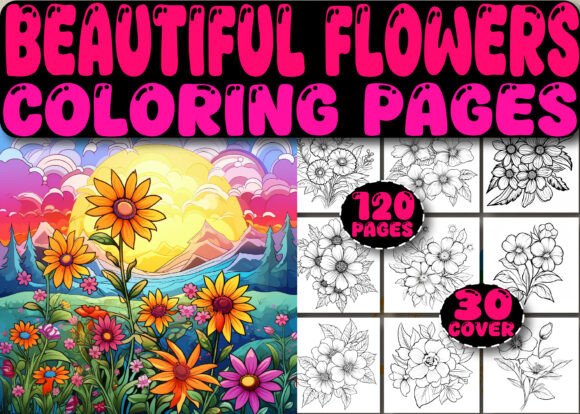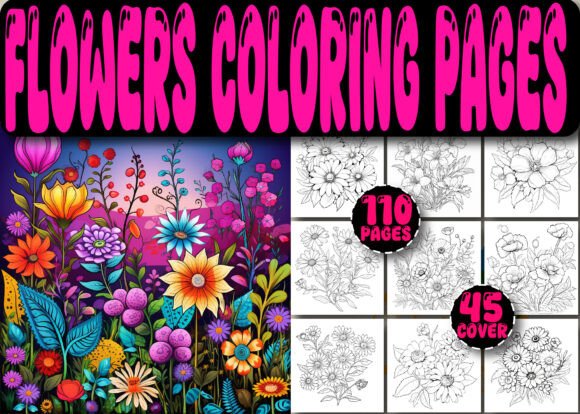
110 Flowers Coloring Book Pages
For creators, publishers, and small business owners building print-on-demand offerings on Amazon KDP, 110 Flowers Coloring Book Pages is more than a design bundle—it’s a strategic asset. It delivers 110 original, high-resolution flower illustrations in five industry-standard formats (.EPS, .PDF, .JPG, .PNG, .SVG), all at 300 DPI and sized for A4 or 8.5×8.5″ layouts. But its real value lies not in quantity alone, but in how deliberately you deploy it—whether launching your first coloring book, expanding an existing catalog, or testing niche appeal with minimal overhead.
Why This Bundle Fits Real Business Goals
Coloring books for adults are consistently among the top-performing categories in KDP’s nonfiction and hobby segments—not because they’re trendy, but because they serve measurable human needs: stress reduction, focused attention, creative re-engagement, and tactile learning. When you select 110 Flowers Coloring Book Pages, you’re choosing a foundation that aligns with those needs without requiring illustration expertise, licensing negotiation, or months of design iteration.
That alignment matters. For example, a wellness coach launching a companion product to their mindfulness course can integrate these pages into a branded workbook—using the SVG files to add custom text overlays or rearrange elements around guided prompts. A stationery brand expanding into printed journals might use the JPG and PNG files to create tear-out floral inserts, then repurpose the same assets for social media visuals. The flexibility across formats means one purchase supports multiple output channels: print, digital downloads, workshop handouts, even limited-edition physical products.
Strategic Use Starts With Intention—Not Just Upload
Uploading 110 Flowers Coloring Book Pages directly to KDP as-is may generate sales—but rarely builds long-term positioning. The difference between a transactional listing and a distinctive brand presence comes down to curation, context, and consistency.
- Curation: Not all 110 pages need to appear in one book. Group them by botanical theme (roses & climbers, wildflowers & meadows, tropical blooms), complexity level (beginner-friendly outlines vs. intricate linework), or functional purpose (meditation-focused symmetry vs. expressive free-form borders). This turns volume into intentionality.
- Context: Add brief, grounded introductions—two or three sentences per section—that explain why a particular flower type supports focus, memory, or emotional regulation. Cite accessible research (e.g., studies linking floral pattern engagement with reduced cortisol) without overclaiming. Readers respond to authenticity, not buzzwords.
- Consistency: If you plan a series—say, seasonal coloring books—use the EPS and SVG files to maintain uniform line weight, spacing, and stylistic rhythm across titles. That visual continuity becomes part of your brand signature.
Format Selection Is a Planning Decision—Not Just a Technical One
The inclusion of five file types isn’t convenience—it’s optionality with consequences. Each format serves a distinct stage in your workflow and influences scalability:
- .EPS is your master editable source. Use it when adjusting line thickness, isolating petal clusters for custom layouts, or preparing files for professional offset printing. Don’t skip this step if you plan hardcover editions—the vector fidelity ensures crisp reproduction at any scale.
- .PDF is ideal for quick KDP uploads and internal proofing. Its embedded fonts and layers preserve structure—but avoid editing it directly. Treat it as a delivery-ready snapshot, not a working file.
- .JPG and .PNG offer fast integration into Canva, Adobe Express, or email marketing tools. PNGs retain transparency for layered designs; JPGs compress efficiently for web previews. Choose based on whether you need background flexibility (PNG) or smaller file size (JPG).
- .SVG unlocks interactivity—think animated website backgrounds, responsive web illustrations, or scalable icons for digital courses. If your audience engages across platforms, this format extends the life of each image beyond static print.
Ignoring format intent leads to avoidable friction: resizing JPGs for large-format prints causes pixelation; editing PDFs in Illustrator often breaks layer integrity; using PNGs for bulk KDP uploads increases processing time. Map each format to your specific next action—not just “what opens easiest.”
Risks of Using 110 Flowers Coloring Book Pages Without Strategy
Without clear goals, even high-quality assets can dilute impact. Common missteps include:
- Overloading a single title with all 110 pages—creating visual fatigue instead of thematic cohesion. Readers prefer curated experiences over exhaustive catalogs.
- Assuming “ready-to-upload” means “ready-to-sell”—overlooking cover design nuance, interior formatting for bleed and margins, or KDP’s latest preview requirements. The included 45 PNG cover files are starting points, not finished solutions.
- Underestimating audience differentiation. A coloring book marketed to retirees may emphasize large, open compositions and nostalgic blooms (peonies, lilacs); one for Gen Z creatives might highlight bold asymmetry and modern florals (protea, bird-of-paradise). The same asset set serves both—if you tailor presentation, not just content.
These aren’t flaws in the bundle—they’re reminders that tools don’t replace judgment. 110 Flowers Coloring Book Pages amplifies your strategy; it doesn’t substitute for it.
Long-Term Value Lies in Reuse, Not Repetition
Think beyond the first KDP upload. Consider how these pages support longer arcs:
- Educational expansion: Biology teachers can annotate the JPG files for plant anatomy lessons; art instructors use SVG layers to demonstrate contour drawing progression.
- Community building: Offer a free “Floral Focus” page weekly via email—using the PNG files for clean, embeddable graphics. Over time, this builds recognition and trust far more effectively than promotional blasts.
- Brand extension: License select illustrations for greeting cards, fabric prints, or enamel pins—leveraging the commercial-use rights included with the bundle. The EPS files ensure scalability from business card to billboard.
This kind of reuse requires upfront organization—naming files by complexity level or botanical family, tagging them in your digital asset manager—but pays dividends in speed, consistency, and creative confidence.
Final Guidance: Start With One Outcome, Not One File
Before opening the .zip folder, ask: What outcome do I want within the next 30 days? Launching a paperback? Then prioritize the PDF and JPG files, verify bleed settings, and draft a concise subtitle that signals audience and benefit (“110 Flowers Coloring Book Pages for Mindful Adults Seeking Calm Through Botanical Detail”). Building a digital course module? Focus on SVG and PNG, isolate 12–15 high-contrast pages, and pair each with a reflection prompt.
110 Flowers Coloring Book Pages works best when treated as infrastructure—not decoration. Its strength is in reliability, adaptability, and resolution—not novelty. Use it to reduce friction in execution so you can invest energy where it matters most: understanding your audience’s unspoken needs, refining your voice, and making deliberate choices about what to launch, when, and why.
That’s how a collection of floral outlines becomes part of a sustainable creative practice—and how a KDP listing evolves into a recognized resource.