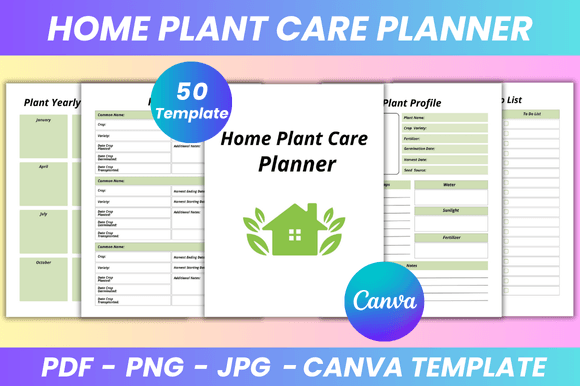
Grow Smarter, Not Harder: Why the Home Plant Care Planner Canva Kdp Is a Game-Changer for Indoor Gardeners
Whether you're nurturing your first monstera or managing a jungle of 50+ houseplants, staying organized isn’t just helpful—it’s essential. Missed waterings, forgotten fertilizations, or confusing repotting timelines can quietly undo months of care. That’s where the Home Plant Care Planner Canva Kdp steps in—not as another static notebook, but as a living, breathing system built for real-life plant parenting.
More Than a Printable—It’s Your Fully Customizable Plant Command Center
The Home Plant Care Planner Canva Kdp Interior isn’t locked in place. Every page is designed to be edited directly in Canva—no design skills needed. Change fonts to match your aesthetic, adjust color palettes to suit your mood board, resize sections to prioritize what matters most to you right now (yes, even if that’s “track every leaf drop on my fiddle-leaf fig”). You’re not filling out a template—you’re building your own plant ecosystem dashboard.
Need a minimalist layout? Done. Prefer bold botanical illustrations with pastel accents? Easy. Want to insert photos of your actual plants next to their profiles? Just drag and drop. The editable Canva link gives you full control over tone, function, and flow—so your planner reflects *your* rhythm, not someone else’s idea of “how it should be done.”
Print-Ready Flexibility Meets Digital Convenience
Once you’ve customized your Home Plant Care Planner Canva Kdp, download high-resolution files—8.5 x 11 inches, print-ready PDFs plus JPG and PNG versions. Print at home for quick reference on your desk, send to a local print shop for a spiral-bound journal, or save the digital version for tablet use while you’re pruning or propagating. No more blurry screenshots or cropped pages. Just crisp, professional-grade layouts that look as good on paper as they do on screen.
What’s Inside? A Deep Dive Into Practical Sections That Actually Work
This isn’t a collection of pretty checkboxes. Each section solves a specific pain point—and does it thoughtfully.
- Plant Profile & Plant Log: Record light needs, watering frequency, soil preferences, and growth milestones—not just for one plant, but across your entire collection. Spot patterns: Does your snake plant thrive only after repotting into terracotta? Does your pothos slow down every November? These logs turn observation into insight.
- Watering Schedule + Weekly Garden Planner: Sync reminders with your actual routine—not an idealized one. Assign days, set recurring notes (“check ZZ plant soil moisture before coffee”), and layer in seasonal adjustments. No more guessing whether “every 10 days” means 10 calendar days or 10 days *if it’s sunny*.
- Repotting Tracker & Propagation Tracker: Track root development, pot sizes, media changes, and cutting dates. Note which node rooted fastest—or which succulent offset refused to cooperate. Over time, this builds your personal propagation playbook.
- Pest Disease Log + Garden Spraying Tracker: Early detection saves plants. Log symptoms, treatments tried (neem oil? insecticidal soap?), application dates, and visible results. Cross-reference with your Garden Pruning Tracker—sometimes stress from improper cuts invites pests.
- Houseplants Wishlist + My Plants Ideas: Capture inspiration *before* impulse buys. Add photos, jot down care requirements, estimate space needs, and flag compatibility with existing plants. Prevent overcrowding, lighting clashes, or humidity mismatches before they happen.
- Monthly To-Do List + Seasonal Checklist: Move beyond “water plants.” Think: “Test soil pH for orchids,” “Inspect south-facing windows for dust buildup,” “Rotate all east-side plants 90°,” or “Start seedlings for balcony herbs.” These aren’t chores—they’re intentional gardening habits.
- Garden Layout + Flower Plant Layout + Plant Map: Visualize spatial relationships—even indoors. Which plants share humidity zones? Where does airflow naturally pool? How much light actually reaches your bookshelf ferns at 4 p.m.? Sketching it out reveals hidden bottlenecks and opportunities.
- Fertilizers Inventory + Produce Budget + Gardening Budget: Know what you have, what you need, and what you’re spending—not per month, but per season. Avoid buying the same seaweed solution three times because you forgot you had two bottles under the sink.
Why This Fits Perfectly Into Modern Plant Care Culture
Today’s plant lovers don’t just want aesthetics—they want agency. They follow propagation tutorials on TikTok, compare soil mixes on Reddit, and track microclimate shifts with smart sensors. The Home Plant Care Planner Canva Kdp Interior meets that energy head-on. It doesn’t ask you to simplify your practice; it supports its complexity. Whether you’re documenting rare variegated philodendrons or rotating crops in a compact balcony garden, the structure scales with you—not the other way around.
And because it’s built for Canva, updates are frictionless. Got a new plant? Duplicate the Plant Profile page. Switching to organic pest control? Edit the Pest Control section with your updated protocol. Moving apartments? Tweak the Garden Layout page to reflect new light conditions—all in minutes.
Real Scenarios Where This Makes All the Difference
You’re recovering from plant loss. After losing a beloved calathea to inconsistent humidity, you open the Home Plant Care Planner Canva Kdp and build a custom “Humidity & Misting Tracker” using the Plant Log framework—adding daily hygrometer readings and misting outcomes. You spot the correlation between radiator use and leaf browning—and adjust.
You’re expanding your collection intentionally. Instead of scrolling endlessly through Instagram tags, you use the Houseplants Wishlist to vet each candidate: “Does it tolerate low light? Can I source its preferred soil locally? Will it fit in my current shelf setup?” You add photos, paste care links, and rate viability—then revisit monthly.
You’re sharing care duties. With editable access, you and your roommate or partner can each customize their own version—same structure, different emphasis. One focuses on watering + repotting; the other handles pest logs + fertilizing. Sync up once a week using shared notes in the Monthly To-Do List.
Smart Choices Start With Smart Tools
Choosing a planner isn’t about finding the prettiest cover—it’s about finding the one that adapts to *your* knowledge level, space constraints, time availability, and curiosity. The Home Plant Care Planner Canva Kdp stands out because it refuses to assume you’ll fit into a mold. It gives you the scaffolding—and the freedom—to define what thriving looks like for *your* plants, *your* home, and *your* life.
It’s not about perfection. It’s about presence. About noticing sooner, acting more confidently, and learning faster—not from books alone, but from your own lived experience, documented clearly and beautifully.
So if your current system involves sticky notes on pots, half-filled notebooks, and mental lists that evaporate by Tuesday—this is your reset button. Editable. Adaptable. Alive with possibility. Your plants won’t thank you in words—but they’ll reward you in new leaves, stronger roots, and steady, quiet growth.